
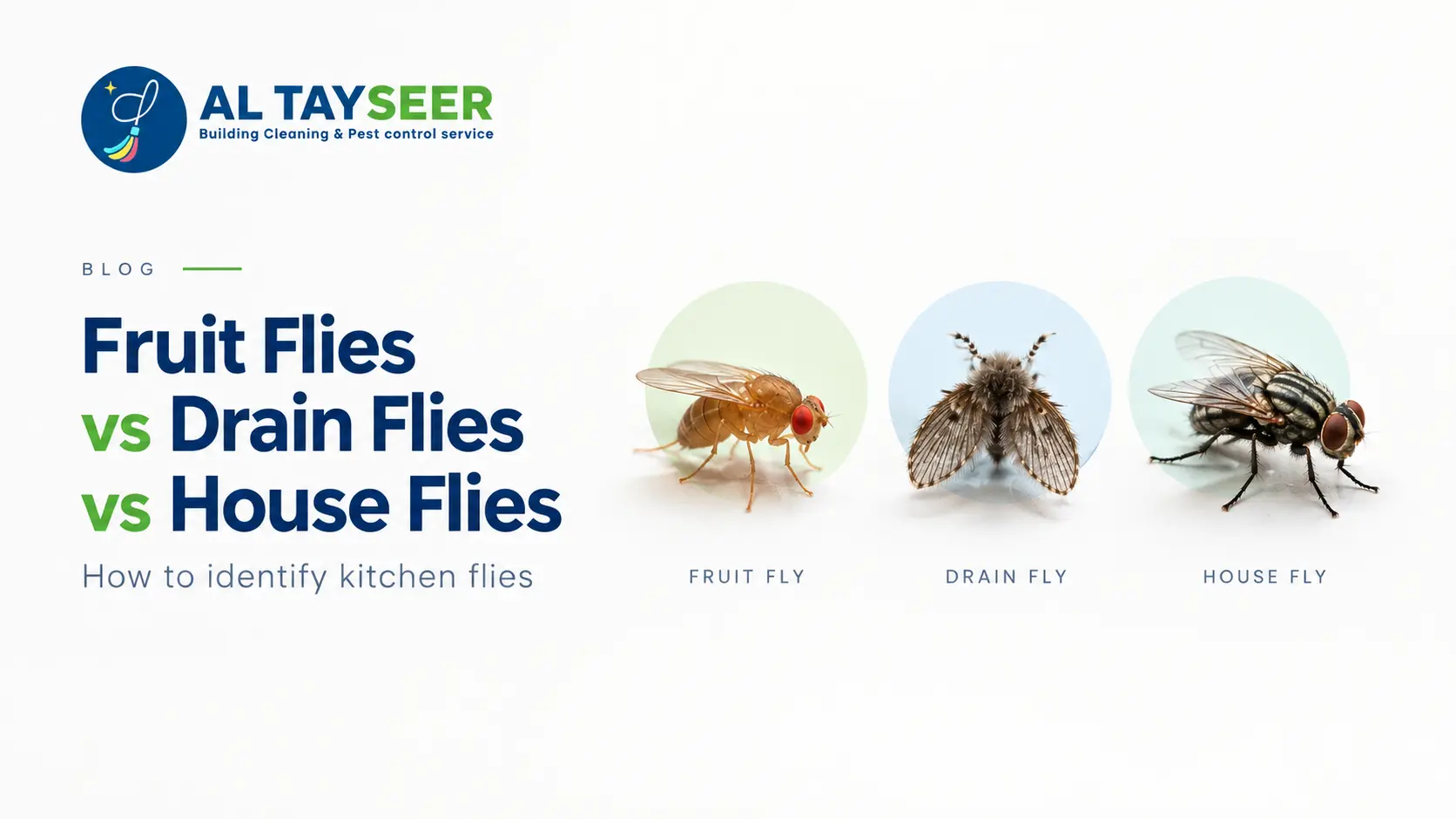
Fruit Flies in the Kitchen: How They Differ From Drain Flies and House Flies
Three different flies, three different breeding sites. If you treat the wrong one, the problem keeps coming back.
A few tiny flies hovering over the fruit bowl or sink can look like one and the same pest. They are not. Fruit flies, drain flies, and house flies look different, behave differently, and breed in completely different places. This guide helps kitchens in Dubai, Sharjah, and Ajman tell them apart so you know exactly where to look.
1. Why Small Flies Appear in Dubai, Sharjah & Ajman Kitchens
Warm weather, frequent cooking, humid kitchens, and fresh produce kept on counters create ideal conditions for flies in homes, villas, apartments, and restaurants across Dubai, Sharjah, and Ajman. Smaller flies such as fruit flies and drain flies are usually found inside the kitchen, while house flies often come in from outdoor bins, balconies, and open doors.
2. How to Recognise a Fruit Fly
Fruit flies are tiny, tan to brown flies about 3 mm long, often with red eyes. They hover lazily around:
- Ripe or overripe fruit such as bananas, mangoes, and dates
- Vegetable peelings and open kitchen bins
- Sugary spills, juice, soft drinks, and empty bottles
- Vinegar and fermenting liquids, including wine and beer residue
3. How to Recognise a Drain Fly
Drain flies, also called moth flies, are small, fuzzy, dark flies with moth-like wings held over the body like a roof. They are weak fliers and tend to hop or flutter short distances near:
- Sinks and floor drains
- Bathroom and laundry drains close to the kitchen
- Damp walls around pipes
For a closer look at where they come from and why they keep coming back, see our earlier guide on drain flies in UAE homes.
4. How to Recognise a House Fly
House flies are larger, about 6 to 8 mm long, grey with dark stripes on the back. They are fast, loud, and strong fliers that land on food, counters, and bins. You will usually notice them:
- Near open doors and windows
- Around outdoor bins and waste areas
- Resting on walls and ceilings at night
If large flies keep coming in from outside, our guide on how to get rid of house flies explains the common entry points.
5. Fruit Flies vs Drain Flies vs House Flies: Side-by-Side
| Feature | Fruit Fly | Drain Fly | House Fly |
|---|---|---|---|
| Size | About 3 mm | About 3 mm | 6 to 8 mm |
| Look | Tan or brown, often red eyes | Dark, fuzzy, moth-like | Grey, striped back |
| Flight | Slow, hovering | Weak, short flutters | Fast and strong |
| Found near | Fruit, bins, spills | Drains and damp areas | Doors, windows, food |
| Breeds in | Fermenting food | Slime inside drains | Waste and rotting matter |
| Usual source | Inside the kitchen | Inside plumbing | Often from outdoors |
6. Where Each Fly Breeds in a Kitchen
- Fruit flies lay eggs on ripening or fermenting produce and in damp food residue. Eggs often arrive on fruit you bring home from the shop.
- Drain flies lay eggs in the slimy film inside drains and pipes, so the real source is hidden out of sight.
- House flies breed in rotting waste, bins, and animal droppings, usually outside, then fly indoors.
Food residue and damp corners also attract other kitchen pests. Our post on common pantry pests in Sharjah, Ajman & Dubai shows how to spot them early.
7. Simple Tests to Identify Your Fly
- Fruit bowl test: if the flies gather over uncovered fruit, they are likely fruit flies.
- Drain tape test: cover a drain with clear tape overnight. If small fuzzy flies stick to it by morning, they are drain flies.
- Size and speed test: a large, fast fly that is hard to swat is most likely a house fly.
- Time test: flies resting on walls near the drain after dark point to drain flies.
8. Why the Correct ID Matters Before You Act
Each fly has a different breeding source, so the same fix will not work for all three. Wiping surfaces will not stop flies breeding inside a drain, and cleaning a drain will not help if overripe fruit is the real source. As Oregon State University Extension explains, finding the source where the larvae develop is the key to ending an infestation, and correct identification comes first.
If you suspect drain flies, read our drain fly guide. For larger flies coming from outdoors, see our house fly guide.
9. When to Call a Professional
Call a professional if flies keep returning after you have removed fruit and cleaned the kitchen, if you cannot find the breeding source, or if you run a restaurant, cafe, or commercial kitchen where hygiene standards matter. A trained technician can inspect drains, bins, storage, and entry points to find the real source. Our fly control service covers homes and businesses in Dubai, Sharjah, and Ajman. You can also contact the Alt Pests team to book an inspection.
10. Related Reading From Alt Pests
- What Are Drain Flies? How to Get Rid of Them in Sharjah, Ajman & Dubai
- How to Get Rid of House Flies
- Common Pantry Pests in Sharjah, Ajman & Dubai
11. Frequently Asked Questions
Are fruit flies and house flies the same?
No. They are different species. Fruit flies are much smaller and breed in fermenting food, while house flies are larger and breed in waste and rotting matter.
Can fruit flies turn into house flies?
No. A fruit fly always develops into a fruit fly, and a house fly always develops into a house fly.
How can I tell drain flies from fruit flies?
Drain flies are fuzzy and moth-like and stay near drains. Fruit flies are smoother, often with red eyes, and hover around fruit and bins.
Why do I get fruit flies even when my kitchen looks clean?
Eggs often arrive on fruit and vegetables from the shop. A single forgotten piece of overripe produce or a damp bin can be enough to start a breeding cycle.
Are small kitchen flies harmful?
They can contaminate food and surfaces, and house flies in particular are a greater hygiene concern. Identifying the fly early helps you act on the right source.