
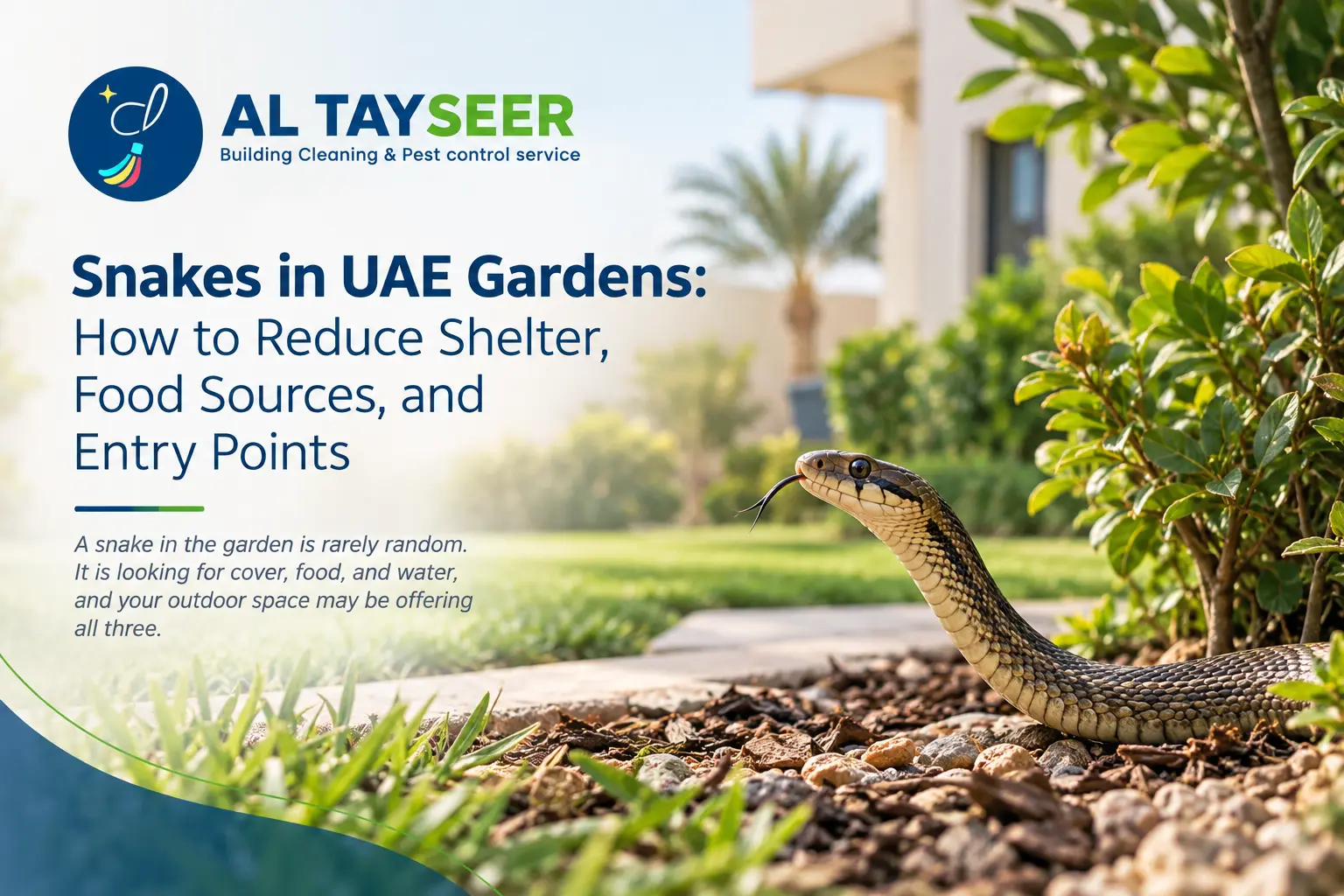
Snakes in UAE Gardens: How to Reduce Shelter, Food Sources, and Entry Points
A snake in the garden is rarely random. It is looking for cover, food, and water, and your outdoor space may be offering all three.
Most snakes that turn up in villa gardens across Dubai, Sharjah, and Ajman are simply passing through or looking for a cool, quiet place to hide. You cannot make a garden snake-proof, but you can make it far less attractive. This guide focuses on prevention: what to change in your garden, what to stop leaving around, and which gaps to close.
1. Why Snakes Move Into Gardens in Dubai, Sharjah & Ajman
Snakes are cold-blooded, so they look for shade in the summer heat and warm, sheltered spots when nights cool down. A garden with dense cover, small prey, and a steady water source ticks every box. Villas in Dubai, Sharjah, and Ajman that back onto open plots, farms, or construction sites see this most often, because wildlife naturally moves toward irrigated green space.
2. Shelter Spots to Remove First
Hiding places do more to attract snakes than anything else. Walk your garden and look for:
- Stacked materials such as firewood, pavers, pipes, timber offcuts, and bricks left against a wall
- Dense ground cover and overgrown shrubs that touch the soil
- Piles of palm fronds, grass clippings, and garden waste left for weeks
- Gaps under sheds, pump rooms, generator covers, and outdoor storage boxes
- Rubble, rockeries, and loose stone with hollows underneath
Raise stored items at least 30 cm off the ground, keep them away from boundary walls, and clear green waste on a regular schedule.
3. Cut Off the Food Chain
Snakes follow their prey. If your garden feeds rodents, lizards, frogs, or insects, it will eventually feed snakes too.
- Rats and mice are the biggest draw. Secure bins, pet food, bird seed, and fallen fruit.
- Pet feeding areas: feed pets indoors or remove leftovers straight after meals.
- Compost heaps: keep them closed and away from the house.
- Fruit trees: collect dropped dates, figs, and citrus daily.
If you already notice droppings or gnaw marks, address the rodent activity first. A professional rodent control service removes the food source that brings snakes in.
4. Water and Irrigation: The Overlooked Draw
In a dry climate, reliable moisture is a magnet for all wildlife. Look at:
- Leaking irrigation lines and dripping outdoor taps
- Standing water in planters, trays, and low patches of lawn
- Overflowing AC drainage pipes at ground level
- Uncovered water features without a clean edge
Fix leaks promptly and keep tanks and sumps sealed. Clean, covered storage also helps. See our guide to water tank cleaning for keeping stored water tidy and secure.
5. Seal the Entry Points Around Your Property
Snakes can pass through surprisingly small gaps. Check the boundary and the building edge for:
- Gaps beneath gates and garden doors. Fit a door sweep or threshold seal.
- Drain covers and drainage channels. Use fine mesh grilles.
- Holes around pipes and cable entries through outer walls
- Cracks in boundary walls and loose base blocks
- Vents and weep holes that open at ground level
Use cement, steel mesh, or weatherproof sealant, because foam alone is easily chewed or pushed through. The same gaps often let in other crawlers too, which is why we also cover scorpion control in the same inspection checklist.
6. Garden Layout Changes That Make a Difference
- Keep grass short and trim shrubs so there is clear ground beneath them.
- Leave a bare strip of gravel or paving about 50 cm wide along walls and fences.
- Prune branches that touch the roof, walls, or fence lines.
- Choose raised planters rather than dense low planting beside entrances.
- Light key areas such as pathways and doorways so you can see clearly at night.
The goal is an open, visible garden where a snake has nowhere to stay hidden.
7. A Simple Seasonal Garden Routine
- Weekly: remove fallen fruit, pet leftovers, and garden waste, and check for leaks.
- Monthly: trim vegetation, inspect storage areas, and check drain covers and gate gaps.
- Before summer and before cooler months: do a full walk-around of walls, vents, and sheds, and repair any new cracks.
Be extra careful when moving stored items, lifting covers, or working in thick planting. Wear closed shoes and gloves, and never reach into hidden spaces by hand.
8. When Prevention Is Not Enough
If you see a snake, keep your distance, keep children and pets indoors, and do not try to catch or kill it. Most bites happen when people try to handle a snake. In Dubai, you can report sightings to Dubai Municipality. Gulf News reports that the municipality urges the public to report pests through its call centre on 800 900 and to dispose of waste properly so pests are not attracted. In Sharjah and Ajman, contact your local municipality or a licensed pest control company.
If snakes keep returning despite your prevention work, a professional snake control service can inspect the property, find the cause, and handle safe removal for homes in Dubai, Sharjah, and Ajman. For a garden check, contact the Alt Pests team.
9. Frequently Asked Questions
Do snakes come into gardens in Dubai, Sharjah, and Ajman?
Yes, though it is more common near open land, farms, and new developments. A well-watered garden with cover and prey can attract one in almost any area of these emirates.
Do snake repellents work?
Results are inconsistent. Removing shelter, food, and entry points is far more reliable than relying on a repellent alone.
Which change helps the most?
Clearing hiding places and controlling rodents. Together they remove both the cover and the food that attract snakes.
Should I move a snake myself?
No. Stay back, keep others away, and contact the authorities or a licensed pest control company.