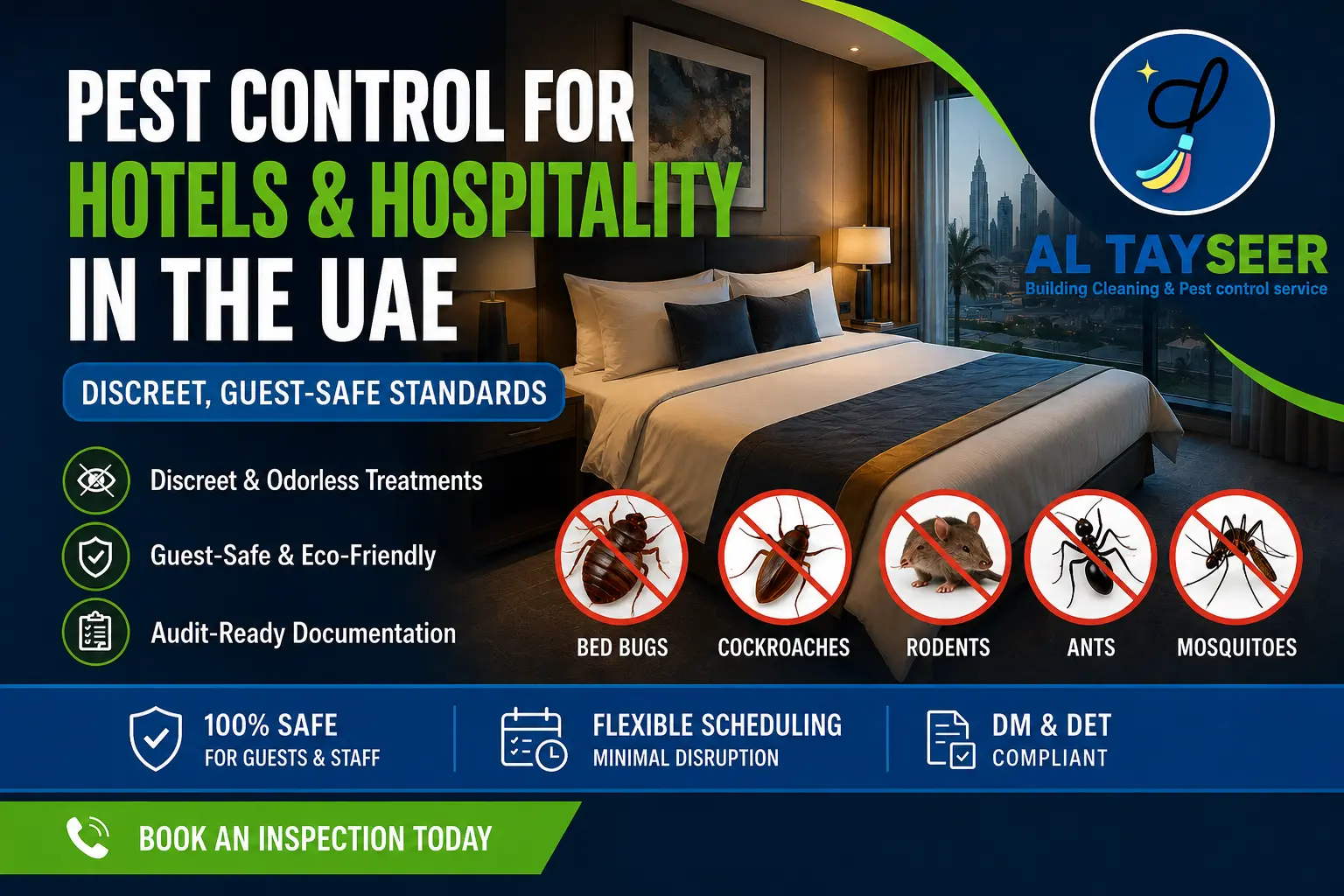
Pest Control for Hotels & Hospitality in the UAE: Discreet, Guest-Safe Standards
Can a hotel handle pest control the same way a normal building does? No — a hotel has to protect two things at once: the guest experience and the compliance file. A single guest photo of a cockroach or a bed bug bite can turn into a public review before housekeeping even hears about it, and Dubai Municipality, DET, and hotel-classification auditors all expect a documented pest control programme on file regardless of star rating. Fumigating a guest room the way you'd treat a warehouse isn't an option — treatment has to be odourless, fast, and invisible to anyone staying on the floor.
This guide covers the pests that create the most reputational and compliance risk in hotels, resorts, and serviced apartments, and what a discreet, audit-ready pest control programme actually looks like in the UAE.
Why Hotels Need a Different Standard of Pest Control
A hotel room is occupied 24 hours a day by someone who didn't choose to be there for a pest treatment — which rules out fogging, strong odours, and any visible equipment left behind. Back-of-house areas like kitchens, laundry, and staff accommodation carry their own food-safety and labour-housing obligations, so a single programme has to cover guest floors, F&B areas, and staff blocks under three different sets of expectations at once.
This is why hotel pest control isn't "commercial pest control with a five-star logo." It's a scheduled, low-odour IPM programme that a housekeeping team can work around without a guest ever knowing it happened.
The Pests That Put Hotels & Resorts at Risk
Every property type carries a different mix, but six pest groups drive almost every guest complaint or inspection flag in UAE hospitality.
1. Bed Bugs
Bed bugs are the single biggest reputational threat in hospitality — they travel in luggage between properties, spread room to room through connecting walls and housekeeping carts, and a guest review mentioning them can suppress bookings for months.
2. Cockroaches
Cockroaches concentrate around hotel kitchens, room-service pantries, and bar service areas, and a single sighting in a guest-facing space is one of the fastest ways to end up in a negative review or fail a food-safety inspection.
3. Rodents
A rodent sighting anywhere on hotel grounds — lobby, kitchen, or basement storage — is treated as a critical finding by most classification auditors, since rodents move freely between back-of-house storage and guest-accessible areas overnight.
4. Ants
Ants follow food and moisture into buffet lines, room-service trays, and poolside snack bars, and a trail crossing a breakfast buffet is one of the fastest complaints to reach a duty manager.
5. Flies & Mosquitoes
Outdoor dining, pool decks, and waste-collection points make flies and mosquitoes a constant nuisance risk for hospitality venues, and mosquito activity around a pool or garden area directly affects how guests rate the outdoor experience.
6. Birds & Pigeons
Rooftop terraces, balconies, and building ledges are prime nesting spots for pigeons, and droppings on a pool deck or terrace dining area are both a slip hazard and a visible hygiene issue guests photograph and post.
What Attracts Pests to a Hotel
Hospitality properties combine several high-risk zones under one roof, which is what makes their pest pressure different from a standalone restaurant or office.
- Kitchens, room-service pantries and minibars spread across multiple floors, each a potential food source.
- Constant luggage and guest turnover, which is how bed bugs and other hitchhiking pests enter a property in the first place.
- Pool decks, gardens and outdoor dining, which combine standing water, food, and warmth in one space.
- Laundry and linen-storage areas, where moisture and fabric create ideal conditions for several pest species.
- Loading docks and waste-collection points, used constantly by F&B and housekeeping deliveries.
Warning Signs Housekeeping & Front Desk Often Miss
In a hotel, the first sign of a pest issue is almost always caught by housekeeping during a room turn, not by management or a guest complaint. Training every housekeeper and steward to recognise and log early signs is the single biggest lever a hotel has over pest-related reputational damage.
- Small blood spots or rust-coloured marks on linens during room turnover.
- Droppings or gnaw marks in minibar cabinets, kitchen stores, or plant rooms.
- Unusual odours in rarely-used storage or service corridors.
- Guest maintenance requests that mention "bites," "bugs," or "something crawling" — the most commonly under-reported early signal.
Reputation Risk: Why Discretion Matters More Than Speed
A visible pest treatment — a technician in full protective gear spraying a public corridor, or a strong chemical smell drifting into a guest room — can do as much reputational damage as the pest sighting itself. Hospitality pest control has to be timed and delivered so guests never see it happen: early-morning or late-night servicing for public areas, low-odour products for guest floors, and technicians briefed to move discreetly through back-of-house corridors rather than guest-facing lobbies.
Dubai Municipality, DET & Hotel Classification Compliance
For a hotel, the pest control file sits alongside food-safety, HACCP, and fire-safety records reviewed during municipality inspections and hotel-classification audits. Dubai's Department of Economy and Tourism and equivalent authorities in Sharjah and Ajman expect properties to demonstrate an active, documented pest management programme as part of ongoing licensing and star-rating maintenance — not just at initial classification.
What an inspector or classification auditor will typically ask for:
- Current service certificates issued after every visit, dated and signed by a licensed technician.
- Treatment logs covering guest floors, kitchens, laundry, and staff accommodation separately.
- Chemical disclosure records, including Material Safety Data Sheets (MSDS) for every product used on-site.
- A written IPM plan with a named responsible contact and an escalation process for guest-reported sightings.
Hotels vs Serviced Apartments & Short-Term Rentals: What Changes
| Hotels & Resorts | Serviced Apartments & Short-Term Rentals |
|---|---|
| Centralised housekeeping means faster detection through daily room turns and structured reporting. | Units are often unattended between guest stays, so issues can go unnoticed for a full booking cycle. |
| Back-of-house zones (kitchen, laundry, staff areas) need separate scheduled treatment from guest floors. | Turnover cleaning teams need a simple checklist to flag pest signs, since they aren't dedicated housekeeping staff. |
| Classification audits expect continuous, property-wide monitoring logs. | Owners or management companies typically need a single per-unit certificate for each listing, renewed periodically. |
Hotel Pest Prevention Checklist
| Action | Why It Matters in a Guest-Facing Property |
|---|---|
| Inspect mattress seams and headboards during every deep-clean room turn | Catches bed bug activity before a guest reports bites or posts a review |
| Treat waste rooms, loading docks and outdoor dining zones weekly | Removes the top attractant for flies, ants and rodents around F&B areas |
| Log every guest maintenance request mentioning bites, bugs, or crawling | Turns informal, easy-to-miss reports into an actionable early-warning record |
| Keep MSDS and treatment logs on file, split by zone (guest floors, kitchen, staff areas) | Required for DET, municipality, and classification-audit review |
| Schedule public-area treatment for early morning or overnight hours | Keeps treatment invisible to guests and protects the on-site experience |
When to Call a Professional
A standard residential pest callout isn't built for a live, guest-occupied property — it doesn't account for discretion requirements, zone-by-zone timing, or the documentation a classification audit expects. Call a specialist if you see recurring pest sightings on any guest floor, a confirmed bed bug report from a guest, a rodent sighting anywhere on the property, or if the site doesn't currently have an active IPM plan and treatment log on file. A licensed inspection identifies the exact species and entry points driving the issue, without alerting guests or disrupting the room inventory.
Why Choose Al Tayseer
- Discreet, Low-Odour Treatment Protocols — guest-floor and public-area servicing designed to be invisible to anyone staying on-site.
- DET & Municipality-Aligned Documentation — treatment logs, monitoring records, and MSDS sheets ready for classification audits and inspections.
- Scheduled Around Occupancy — early-morning, overnight, and back-of-house timing to avoid any guest-facing disruption.
- Rapid Bed Bug Response — priority scheduling for guest-reported bed bug incidents to protect same-day room recovery.
- 25 Years of UAE Commercial & Hospitality Experience — hotel, resort, and serviced-apartment pest patterns across Sharjah, Ajman, and Dubai tracked by our technicians for over two decades.
Frequently Asked Questions
How often should a hotel schedule pest control in the UAE?
Most hotels run monthly property-wide inspections, with kitchens, laundry, and waste areas treated as priority zones and guest floors covered through scheduled preventive visits plus rapid response to reported sightings.
Is pest control mandatory for hotels in the UAE?
Yes — an active pest control programme with current certificates and treatment logs is expected as part of ongoing DET and municipality licensing, alongside food-safety and fire-safety documentation.
How is hotel pest control different from a normal commercial service?
Hotel treatment has to stay discreet and low-odour since guests are on-site around the clock, with timing built around housekeeping schedules and back-of-house zones handled separately from guest floors.
What should a hotel do if a guest reports bed bugs?
The room should be taken out of inventory immediately, neighbouring rooms inspected, and a licensed technician called for rapid treatment — early containment is what keeps a single-room issue from spreading floor-wide.
What pests are most commonly found in UAE hotels and resorts?
Bed bugs and cockroaches drive the most guest complaints, alongside rodents in storage areas, ants near buffet and pool-bar zones, mosquitoes around outdoor seating, and pigeons on rooftops and balconies.
What documentation should a hotel keep on file for pest control?
A current service certificate, zone-by-zone treatment and monitoring logs, MSDS for every product used, and a written IPM plan naming a responsible contact for guest-reported incidents.
Book a Hotel or Resort Pest Inspection in Sharjah, Ajman, or Dubai
Don't let a pest sighting become a review. Our licensed technicians can inspect your property, confirm what's active, and put a discreet, audit-ready treatment plan in place.